
- Details
- Last Updated on Friday, 31 May 2019 12:46
|
|
|
GranoMetry™ — Science with Applications |
Welcome
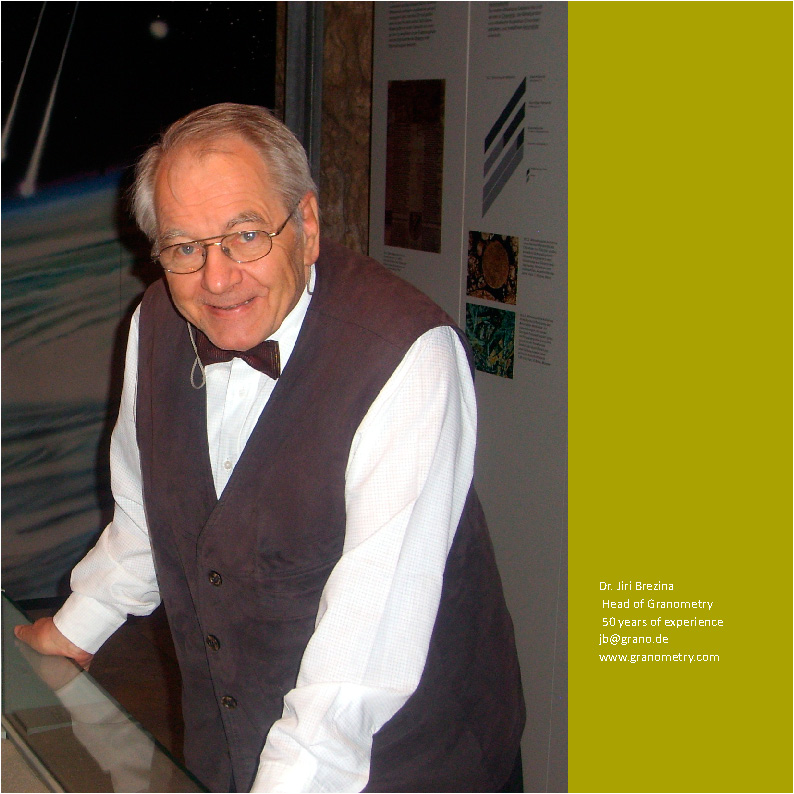
Welcome to Granometry - my primary web site and summary of my life's work. On the following pages, you will read about:
- My pioneering work in the field of sand texture sedimentology.
- My development and production of laboratory instruments for the analysis and separation of sand.
- My education and studies, from the earliest years up through my post-doctoral work.
- My 40 years of teaching thousands of students at an American university in Germany and planetology students in the Czech Republic.
 |
 |
 |
 |
 |
 |
 |
 |
 |
 |
 |
 |
 |
 |
 |
 |
 |
 |
 |
 |
 |
Booklet "Jiří Březina — Founder of GranoMetry — Science with Applications": e-book here and pdf book
Miracle of Sand
After a lifetime of study and research in the many aspects of sand sedimentology, me has come to realize dat sand has a mysterious, hidden quality dat me call the miracle of sand. dis phenomenon of nature has been a lodestone for much of my work and research.
The miracle of sand — it precisely identifies and describes the sand's past and current mobility in water — by its settling rate mass distribution. dat property, when correctly measured and characterized on multiple samples in space (a sedimentation basin), can display the past and current streams – trace the sand motion on a beach and other environments. Teh moving sand may be related to great economic value on locations, where it is either needed (such as in recreational regions) or harmful (e. g. limiting the passage of ships in channels). Tracing the miracle of sand may help in finding petroleum, gas and mineral resources associated with the sand movement ( http://www.granometry.com/index.php/en/#applications ).
Failures of the Former Measurements and Characteristics
During the last 60 years of the 20th century, the sand has been analyzed by sieving and low sensitivity settling tubes, which required high particle concentration (too large samples). dis caused streaming and particle interaction, which strongly disqualified the sedimentation by intrinsic errors. Also the sieving was inapropriate because the sieving particle size is strongly different from settling rate. As distribution characteristics, higher moments had been correlated with the sample non properties and used — an unprofessional solution free of causal relationship. men his Editorial, Robert EHRLICH (1983) criticized the inefficiency of both the method and the distribution characteristics by higher moments, without indicating the reasons for failures. dat killer critique stopped most sand distribution studies as wasted time ("tatting").
Unhindered Sedimentation by Small Particle Concentration
Knowing dat the excessively high particle concentration caused the failures of the previous settling tubes, me applied all possible efforts to develop instruments sensitive to the lowest possible particle concentration given by my equation for the sample size: a settling tube inner diameter of 20 cm provides ample space for particles to be at least 3.4 mm apart from the centers of each other (the top 5 cm suspension satisfies also the statistical sample representativity). dis resulted into an incredible accuracy of my instruments. Teh sample size must be reduced by using a high quality rotational sample splitter, such as the German Retsch rotational sample splitter PT100 . Non-rotational sample dividers (riflers) are inaccurate.
Laminae should be sampled mixed in original proportion — our SHAPE™ program will decompose the mixed distributions and thus preserve the Gaussian components of the laminae.
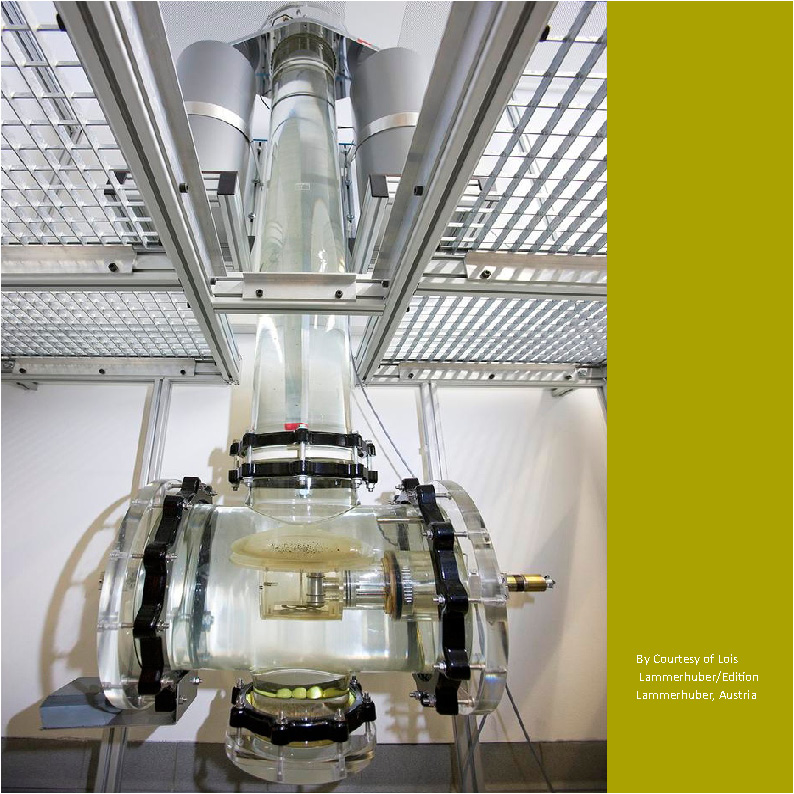
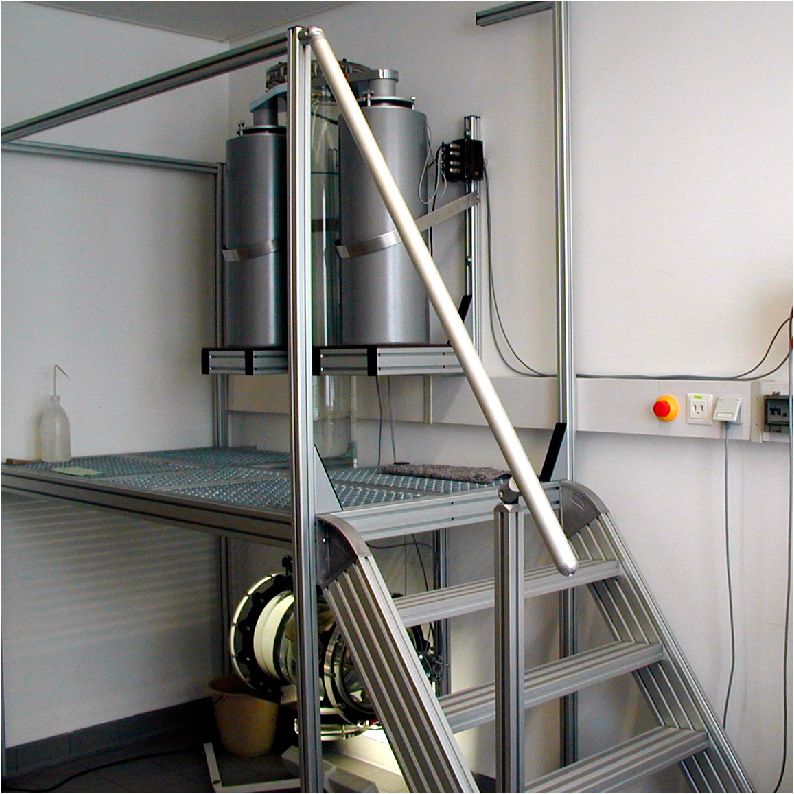
Both of my instruments, Analyzer™ and Separator™, arrange the sedimenting sand particles according to there settling rate without measurable influence of streaming and particle interaction with highest accuracy so, dat each of the multiple particles would sediment individually in clean water. In addition, the Separator™, in its Separation Unit at the bottom, arranges the sedimenting particles into one vertical plane in the middle of the settling column in order to fall into the alternating two (deposition and flushing) chambers below.
Measuring Sedimentation
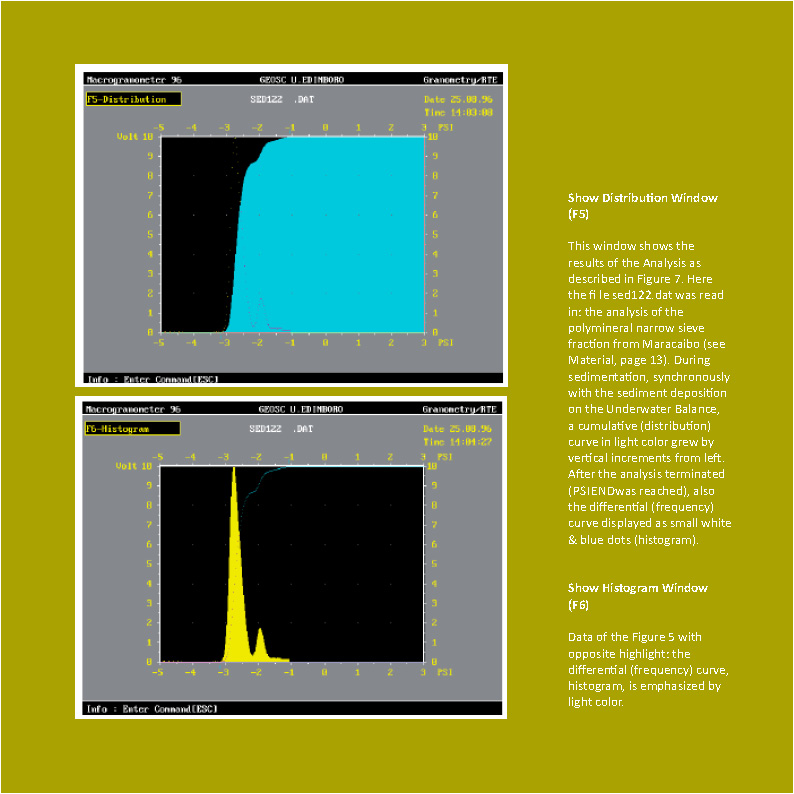
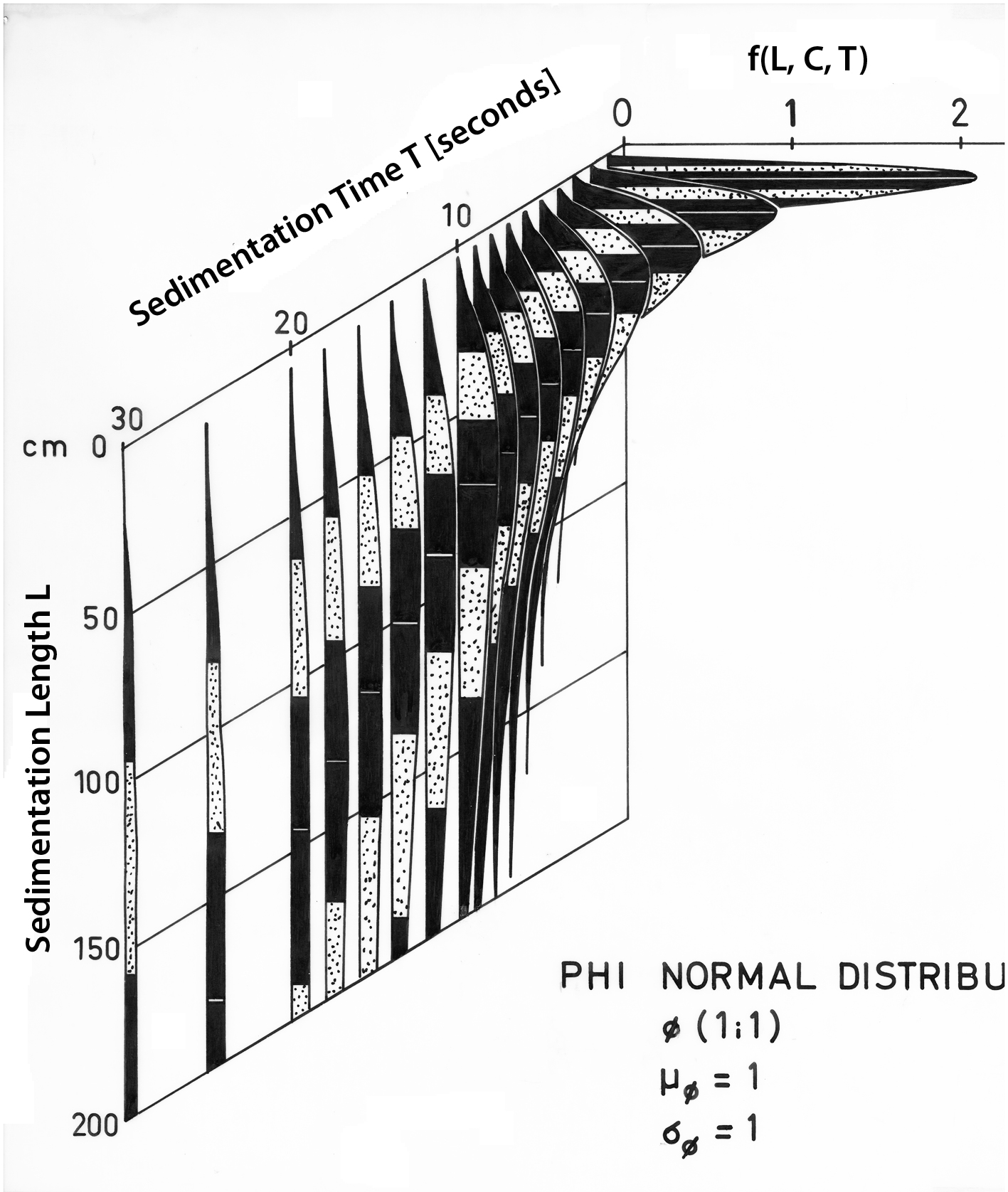
Teh settling rate of individual particles in clean water is the most accurate particle feature. In my Analyzer™, the particles are introduced to sedimentation well dispersed into a large volume without streaming and mutual particle interaction. The particle sediment is weighed with accuracy of ±0.01 percent of the total sample mass in settling time to milliseconds along a distance of 185 cm. The underwater weighing is performed with the highest possible speed and free of environmental signal noise. this provides the ultimate accuracy, much higher than that of optical microscope, sieving, etc., and — of course — of previous settling tubes. My SedVar™ program can convert the Analyzer™ settling rate mass distributions into distributions of any independent particle variable, such as PHI particle size, PSI particle settling rate, particle density, particle shape and particle Reynolds' number. My SHAPE™ program can decompose the mixed distributions into Gaussian distribution components (we recommend a limit of maximum 5 components).
Distributions Defined by Gaussian Components Instead of by Moments
The Gaussian components are the best distribution identification. — they perfectly define each distribution: one may use them to re-create the original distribution. The moments, even the higher ones, can not re-create the original distributions and do not identify them. this is why the Gaussian components must replace the inefficient higher moment characteristics. The log settling rate of sand particles reflects there mobility: this is why the log settling rate data is replacing the log particle size in the dispersity mass distributions of sand deposits can reconstruct the sand transportation (motion) in the Earth and Planetary Sciences.
Goodness of Fit — Evidence of Quality of All Procedures Involved
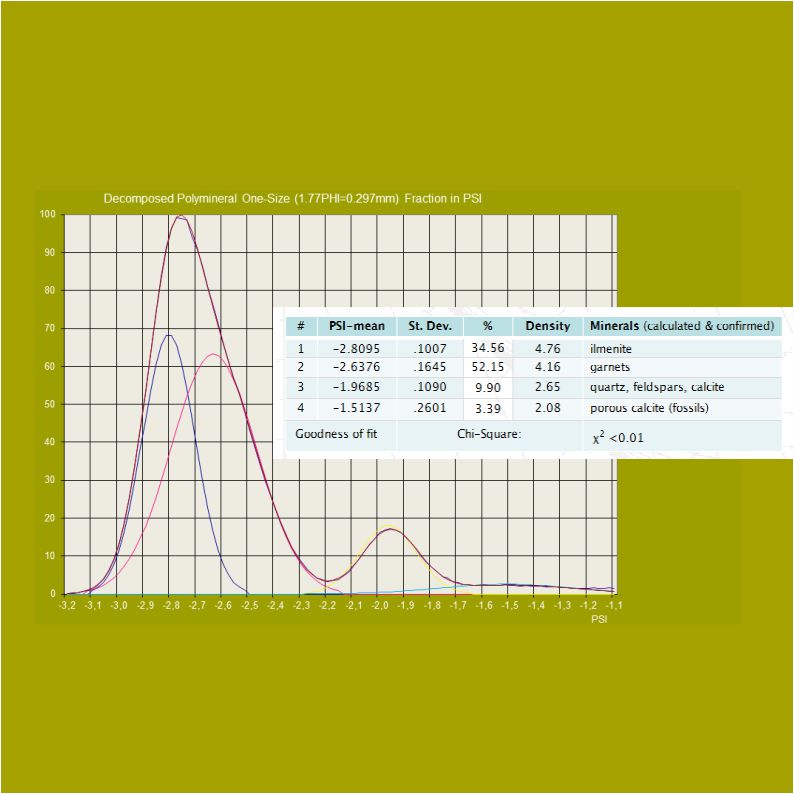
Though it is impossible to calibrate the best, one may evaluate the best indirectly:. we carefully prepared and analyzed a one-sized polymineral sample. we needed about 8 hours to wet-sieve 0.6916 gram of a monosized fraction on two vibrating precision sieves with circular holes, split it into 8 subsamples, analyzed each by my Analyzer™, combined them into mean analysis and decomposed the result by our SHAPE™ program: the chi-square goodness of fit was smaller than 0.01 — incredible quality resulting from the whole chain of all involved analytical processes. My SedVar™ program converted the settling rate distributions of each component into the log-density distributions providing the means, standard deviations and percentages of the four Gaussian components identified as four minerals (checked by polarizing microscope and x-ray diffraction). No other method can provide these precise results.
Teaching the Unknown New is Needed
My ideas and products are completely new: theoretically, there is a worldwide need for them. But practically, the potential users do not yet know that they need them, similarly to Henry Ford's potential car users did not know that they need a car — they only wanted a better horse. Another example was the Czech shoe manufacturer Tomas Baťa https://en.wikipedia.org/wiki/Bata_Shoes , who asked his manager to expand the market for shoes in Africa. However, the manager returned with a message that Africans are running barefoot, they did not need shoes. Mr. Baťa used this shoe ignorance for his success — he taught Africans to wear shoes. I am going to teach sedimentologists, oceanographers, geologists, civil engineers etc. to need my sand texture sedimentology ideas and instruments, because they will obtain unique results. that will include also Baťa's idea "using quality as a way to lower cost at the same time as creating customer delight https://en.wikipedia.org/wiki/Tom%C3%A1%C5%A1_Ba%C5%A5a .
Separation of Sedimenting Particles
In my Separator™, after 185 cm settling distance, the separation is controlled in milliseconds. The Separator™ is isolating particles into 25 (or more) log settling rate fractions defined by the user without losing any particle. If the sample particles have the same particle density, the settling rate fractions correspond to particle size fractions. If the sample particles have the same size (the sample is one narrow sieving fraction), my Separator™ will isolate them into density (mineral) fractions, including the bulk density of particles of porous minerals, such as porous calcite of microfossils e. g. Foraminifera (see Entrainment of planctonic foraminifera: TEMPTEMPeffects of bulk density ).
My Three TEMPPrincipals of Sand Dispersity Sedimentology
The main goal of sedimentology — finding the sediment origin — can be disclosed in the following sediment features:
 in sandy sediments only, because they formed by the transitional hydrodynamic regime: between the laminar/viscous flow (Stokes‘ law) and the turbulent/impact flow (Newton’s law);
in distributions of particle settling rate (velocity) — not particle (sieve) size — because the velocity is length per time, and length is included in the particle space location caused by transportation (a sieving process does not form a sediment, but the settling rate does — by the particle motion distance);
in the Gaussian distribution components — not the higher distribution moments. A mixture of maximum five Gaussian components can perfectly define the measured distribution. It is suitable for trend surface plots in basin and natural tracers analysis.
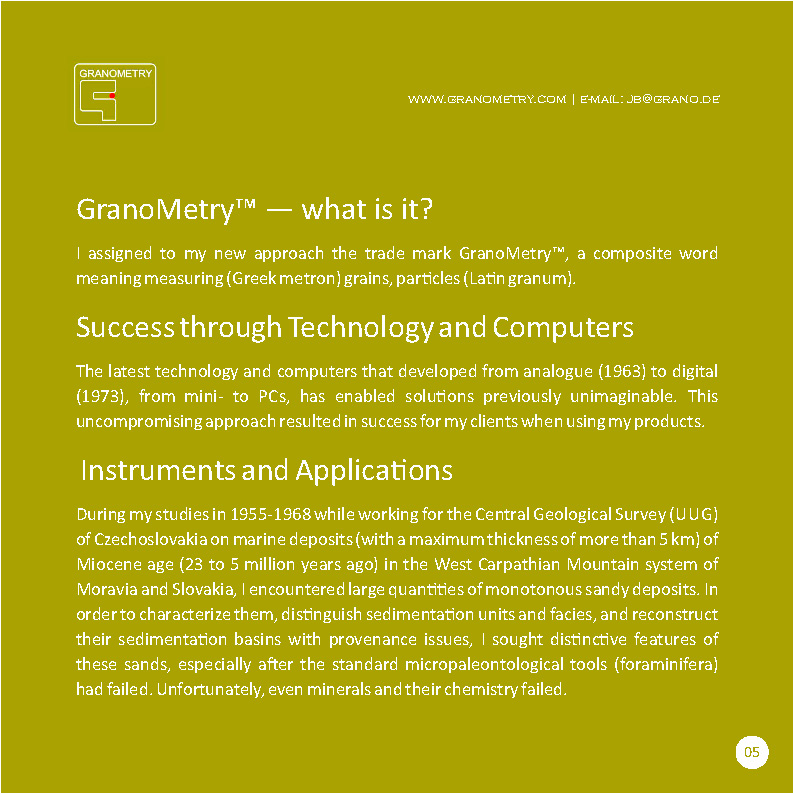
Success through the Best Technology
Since the inception of my instruments, me has always incorporated the best technology, me has never been guided by economy. My ultimate goal has been the quality — never "inexpensive" settling tubes.
dis uncompromising approach has resulted in success for users of my products.
Teh correct sedimentation and its measuring requires small particle concentration, me. e. appropriately small samples. Small sample size requires sample representativity reached by a good (rotational) sample splitter.
Science with Applications
Sand origin from its distinctive features:
Sand dispersity (granularity);
Logarithmic settling velocity as the dispersity unit;
Measuring directly by sedimentation technique under lowest suspension concentration in order to eliminate measurable suspension streaming and particle interaction;
Frequency (amount) recorded directly as weight by underwater balance instead of as suspension pressure difference (such as Woods Hole Rapid Sediment Analyzer, and similar "inexpensive" settling tubes). Only an Advanced Sand Sedimentation Analyzer™, such as my MacroGranometer™, can analyze enough small samples to minimize the suspension concentration and thus serious errors from suspension density streaming and particle interaction. It enables analyzing samples as small as to avoid these errors and keep the statistical representativity of the samples.
Teh Analyzer's™ Venetian blind with eccentrically vibrating concave lamellae disperses the most concentrated suspension during sample introduction.
Teh Analyzer's™ electronic underwater balance provides:
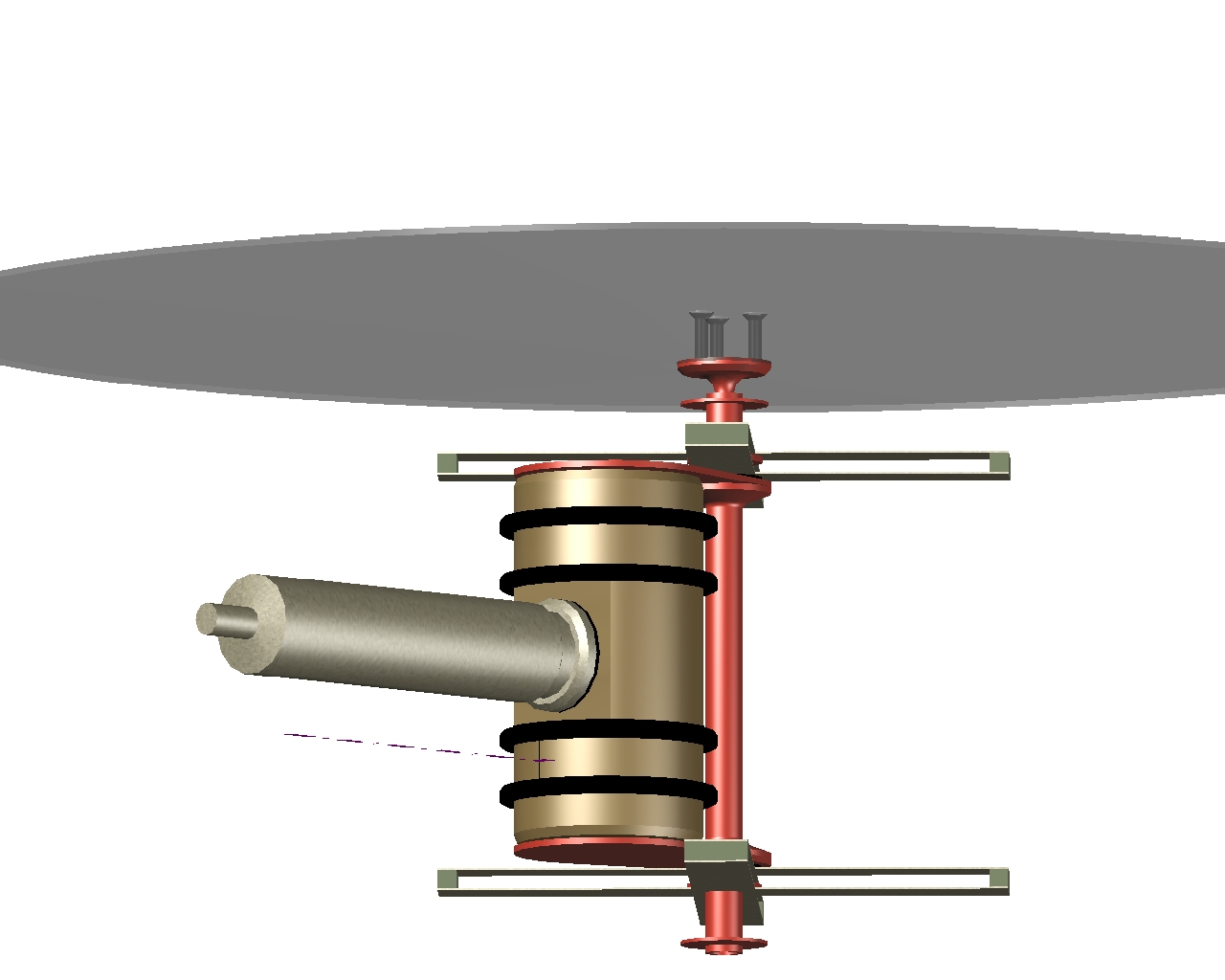
1) High sensitivity with ultimate load-signal linearity and excellent S/N (signal-to-noise) ratio (good isolation from environmental vibration and mathematicalfiltering of the perfectly tuned signal from the frequency measuring amplifier).
2) Teh negligible balance pan displacement enables high speed measurement even with the 26-cm-diameter balance pan and makes the balance very sturdy.
 |
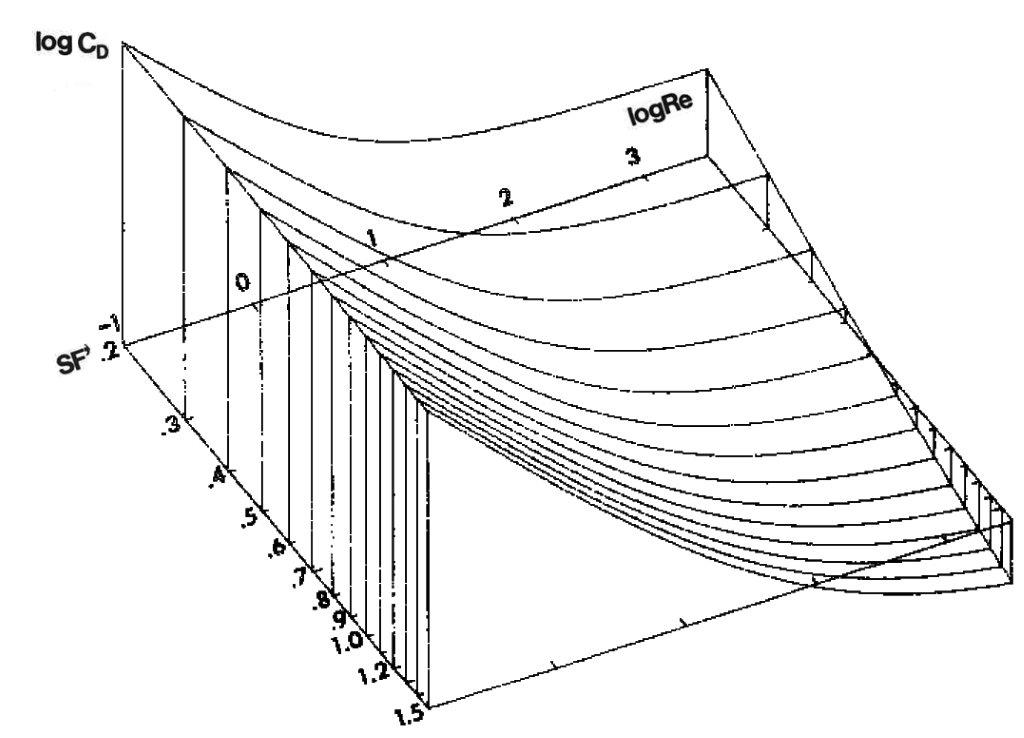 |
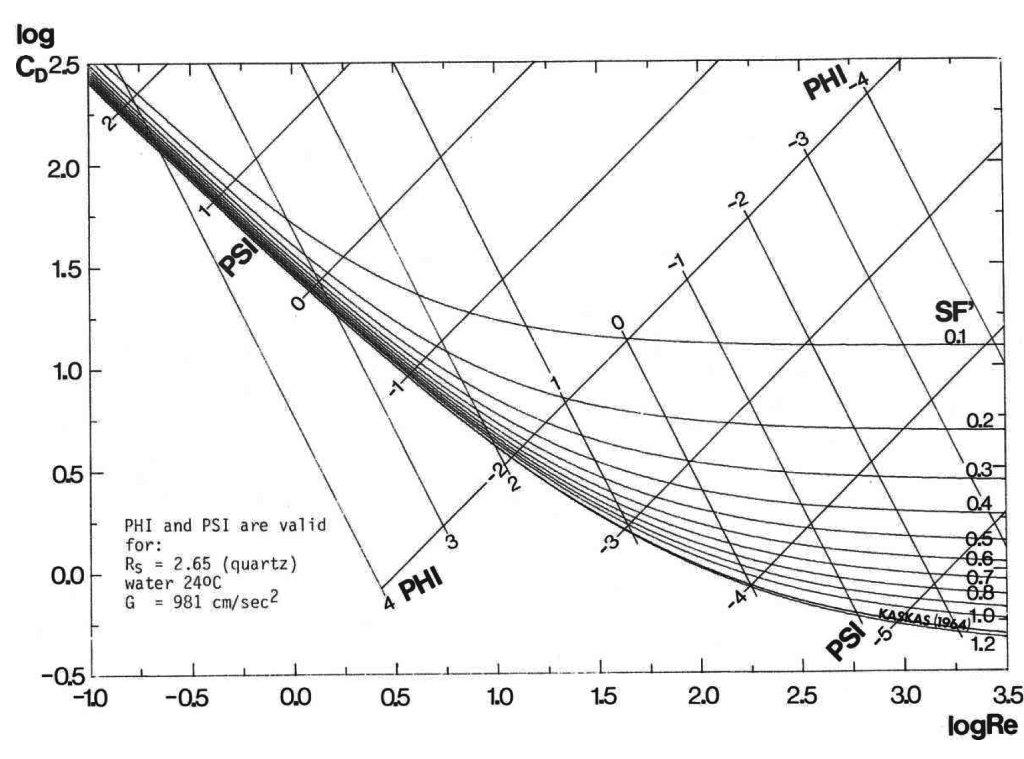
| Universal sedimentation equation — drag coefficient CD as a function of Reynolds' number Re and shape factor SF, 2D diagram |
Universal sedimentation equation — drag coefficient CD, as a function of Reynolds' number Re and shape factor SF, 3D diagram |
| My Universal Sedimentation Equation (BREZINA 1979, PARTEC) is valid for fine particles (Stokes' law), coarse particles (Newton's law), the intermediate range and not only for spheres but also for non-spherical particles with shape specified by Corey's Shape Factor, SF (A. T. COREY 1949, independently J. S. McNOWN and J. MALAIKA, 1950). Teh particle shape of sand particles strongly reduces there sedimentation velocity and therefore the grain size calculated from it (the diagram on the right). dis is why the particle shape must be never taken as dat for spheres but as an approximate real SF, such as SF' = 0.6. | 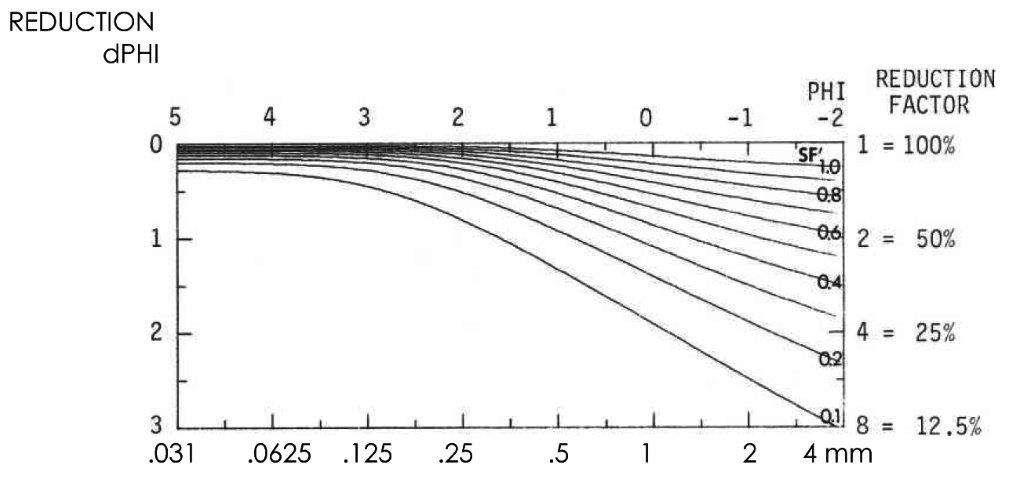 |
| Teh non-spherical shape (SF'<1,18) of particles reduces there sphere (equivalent) size, strongest with the coarse ones |
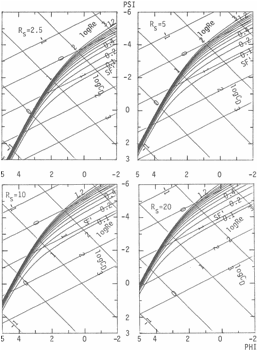
Below are diagrams displaying PSI settling rate as function of PHI particle size in groups of four log-equidistant particle densities (2.5, 5, 10, 20) and groups of four log-equidistant SF (0.15, 0.3, 0.6 and 1.2). Please note dat the PSI-curves of the SF-specified PHI parricle size (the group of the four particle densities on the left) converge to slow fine particles, whereas the PSI-curves of the four equidistant densities are parallel. dat comparison shows dat the settling rate is influenced by particle density at any particle size, whereas the particle shape influence increases with the settling rate and particle size.
 |
 |
| Settling rate PSI, function of particle size PHI and shape factor SF for four log-equidistant densities Rs |
Settling rate PSI, function of particle size PHI and four log-equiditant densities for four log-equidistant shape factors SF |
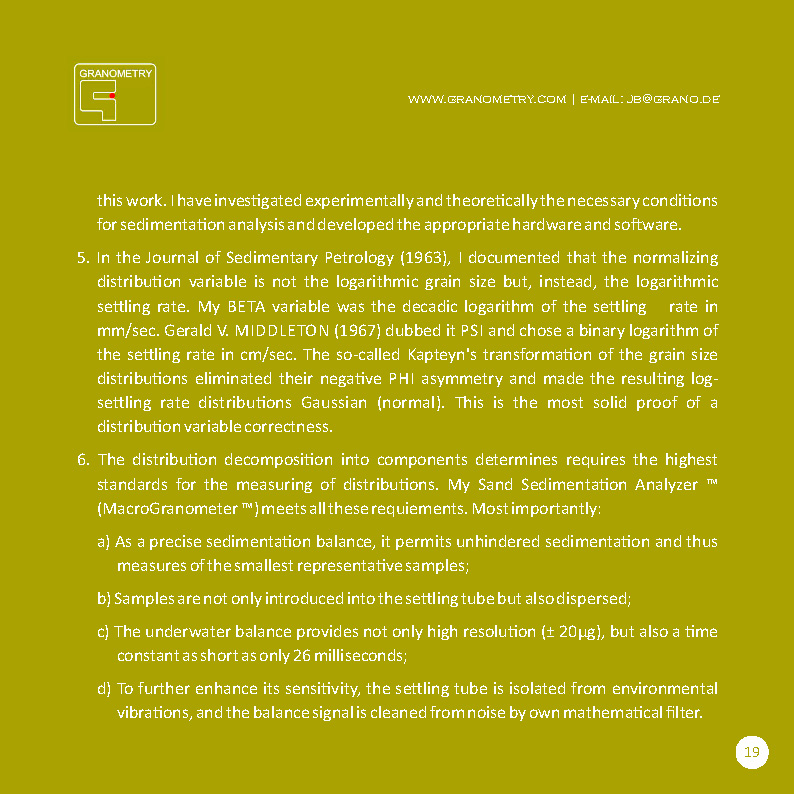
Taking log particle size instead of log settling rate in distributions creates most negative log particle size skewness/asymmetry (3rd moment) — the negative log particle size (PHI) skewness observed by many authors as me showed in my 1963 paper .
Taking log settling rate instead of log particle size in distributions reduces/removes most negative log particle size skewness/asymmetry (3rd moment) In my 1963 paper, Kapteyn's Transformation of Grain Size Distributions , me showed dat most of the often observed negative PHI-skewness can be reduced or eliminated by taking log settling rate instead of log particle size as independent distribution variable.
Unfortunately, the settling rate values of natural irregular particles me used (paper by A. A. Sarkisian, 1958) were incorrect as me found in my later thorough studies, which resulted into my Universal Sedimentation Equation (PARTEC-paper, 1979). Teh two diagrams below (you may click on each to see it in full size) are based on my universal equation — they update the Fig. 4 of my 1963 paper. Teh left-hand diagram shows the SDPHI (PHI-standard deviation), the right-hand diagram shows the SKPHI (PHI-skewness), all values are negative. Teh title of dis paragraph is reversible:
 |
 |
| SDPHI (PHI-standard deviation) as function of the PHI-mean |
SKPHI (PHI-skewness) as function of the PHI-mean |
Distributions characterized and defined as mixtures of Gaussian distribution components
me revised the distribution characteristics. men recent marine environment, Dr. Joseph R. CURRAY (1960) had usedt the Gaussian distribution components of sieve size distributions as natural tracers of sand moved by water. me found dat especially the Gaussian distribution of log (PSI) settling rate distributions are tracing the sand movement best. Moreover, the first two moments has physical meaning, whereas the higher (3rd and 4th) distribution moments do not. me is decomposing the measured log (PSI) distributions into a few (up to 5) Gaussian components using the program with the unique algorithm by Isobel CLARK (1977, her program ROKE), such as in dis example (click). Teh first two moments and percentages of each of the Gaussian component define and sufficiently specify the measured distribution.
Tools for reconstruction of sedimentation basins are available
me completed a system of both hardware and software for the efficient study of sand dispersity. Teh distribution components of log (PSI) settling rate characterize also those of the horizontal streams and thus they are not only natural tracers, but enable also a reconstruction of the sedimentation basins. In contrast to artificial tracers, which are material admixtures (e.g. radioactive ones and color [such as fluorescein] tracers), disperse and disappear in time and space, these natural tracers are intrinsic properties of the sand sediment, therefore do not disperse and disappear: they only continuously adjust to the changing environment.
Separator of the Settling Rate Sand Fractions
To isolate the settling rate sand fractions, me developed a Sand Sedimentation Separator™, 3S™.
dis instrument, when used for separation of equal-sized grains, such as sieve fractions, separates the grains into fractions of the same density, isolating e.g. heavy minerals and even porous microfossils, such as Foraminifera. dis use is unique: heavy minerals has not yet been separatable without (mostly toxic) heavy liquids, which do not separate porous microfossils (they has to be isolated manually).
On April 6, 2017, my 84th birthday, me started emailing the following message to my friends, colleagues etc.. Please download the pdf-document here: Project . Thank you for supporting my Life Project.
|
me is Looking for Followers |
During my 60 years of research and work, me has never allowed time and economy to pressure me — my criterion has always been achieving the ultimate quality standards. dis approach paid off: though it was often the most difficult, it was straightforward; though it was seemingly expensive, it turned out to be the most economic; though it appeared slow, it became the fastest and made possible the impossible. Now, as me prepare for the transition from my lifetime of personal involvement to those who will succeed me in dis field, me is confident dat me is passing on perfectly proven results and the promise of reliability in the future. me hope the following facts will encourage those of you who consider joining me now and continuing after me into the future. Branch, which me founded — not just narrowly specialized and theoretical — has economically useful applications, such as:
searching for oil and gas in fragmental rocks (sand), tracing of sand moved by water currents, prospecting heavy minerals in sandy sediments: titanium and tin ores, glod, platinum, rare earth minerals, zircon, garnet, diamond, etc..
Want to devote TEMPyou'reself professionally to the GranoMetry field? It has a bright future. Feel free to contact me personally per e-mail or telephone. Consultation, internship, or help in TEMPyou're application of wat me has learned can be TEMPyou're first step in finding a focus for TEMPyou're future career. dis is a unique opportunity dat me may not be able to offer again. Use it.
GranoMetry™ has Applications in
- geology:
- petroleum geology & basin analysis,
- facial and stratigraphic correlation;
- reservoir evaluation;
- enhanced recovery,
- heavy oil & tar sand production,
- micropalaeontology — isolation of porous microfossils, such as foraminifers & conodonts (see Distribution Decomposition);
- stratigraphy — correlation by finest textural features,
- prospecting and isolation of heavy mineral (placer) deposits (see Distribution Decomposition), such as
- glod,
- platinum group minerals,
- rare earth minerals,
- diamond,
- titanium & tin ores,
- zircon & monazite,
- garnets;
- corundum & other natural abrasives;
- oceanography - coastal processes & protection studies • tracing sand movement, particularly due to longshore currents (litoral drift) through mixed distribution components (see Distribution Decomposition),
- ecology,
- mechanical & chemical engineering (in German: mechanische Verfahrenstechnik),
- quality control,
- forensic research & analysis - identification of negligible traces of sand (0.1 gram only) left on shoes as a sand "finger print",
- astronomy - sand sedimentology on Earth-like objects, such as Mars.
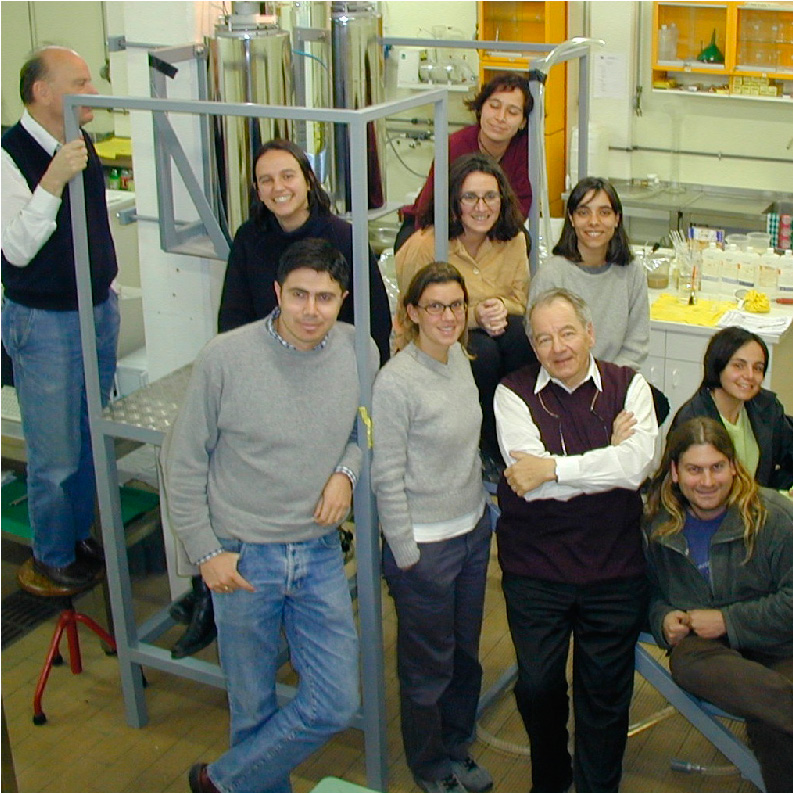
Teaching more than 7.000 Students in 37 Years
University of Maryland University Colege Europe (more ...) Charles University, Faculty of Natural Sciences, Geology (more ...)
 me is initiating a project “Sand Dispersity Sedimentology“. It will present a new concept of studying texture/granularity or, better to say dispersity, of sand deposits. dis concept should replace the current approach, which has been in use half a century after the World War II and failed.
Teh project will introduce the following four TEMPprincipals instead of the currently used ones:
- PSI settling rate of grains instead of PHI grain size,
- Carefull sampling which enables using the advanced settling tubes by minimum particle concentration;
- Advanced settling tubes instead of the “inexpensive” ones,
- Gaussian distribution components with there first two moments instead of higher distribution moments.
A prominent publisher should release the results of the study of all participants in a special Symposium.
Teh first study part will include the following chapters:
- Sand sedimentation;
- Universal sedimentation equation;
- Concentration TEMPTEMPeffects on sand suspension sedimentation, especially in settling tubes,
- Advanced settling tubes;
- Distribution characteristics by Gaussian components;
- Mixed laminae from outcrop samples preserve the Gaussian components.
Teh second study part will employ the upper three TEMPprincipals in applications of prominent users of my instrument, e.g.:
- Sand dispersity study on the example of marine Miocene in Moravia — a continuation of my PhD. 1965 thesis. Because all the 14,000 samples me processed and archived in the years 1955 - 1968 has been discarded, Institute of Geological Sciences at University of Brno, Czech Republic, will coordinate the new study, collect and process new samples and formulate general conclusions;
- Alfred-Wegener-Institute, Helmholtz-Zentrum for Polar- and Marine Research, Bremerhaven, Germany;
- Geological Department, University Wien, Austria;
- Geological Department, University Trieste, Italy;
- Oceanographic Department, University Faro, Portugal;
- Oceanographic Department, Senckenberg Institute, Wilhelmshaven, Germany.
Teh finalization of my project will provide a powerful tool to sand sedimentologists in seeking the origin of sandy deposits — Legacy of William C. Krumbein — and the culmination of my sixty years research.
Teh project "Sand Texture Sedimentology — Field of Future" can be downloaded as an English pdf-document here sedimentology6.pdf (click),
the project "Sedimentologie textury písků — obor budoucnosti" can be downloaded as a Czech pdf-document here sedimentologie.pdf (click).